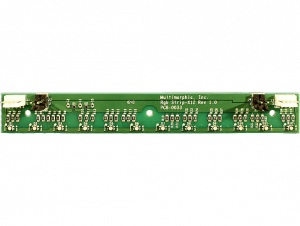
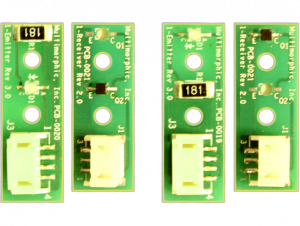
Driver Boards
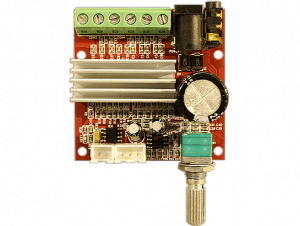
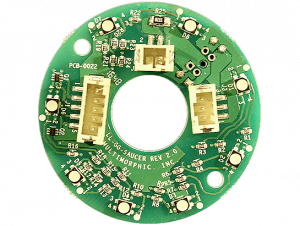
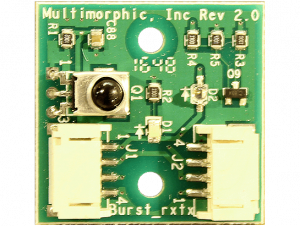
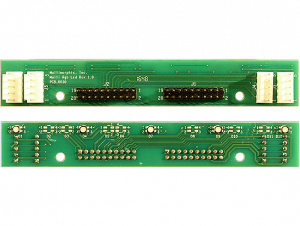
Driver boards are used to control features (coils, leds/lamps, motors, etc) on a pinball machine or in other applications. They can be driven by a P-ROC and many other programmable microcontroller-type devices.
Each driver board has an RS-485 serial interface so that it can be chained to other driver boards. Therefore, you can use as many boards as your application requires. Further, since the serial interface will continue to work at distances well over 10 feet (100 feet even), you can locate the boards in the backbox, under the playfield, or anywhere else in your machine.
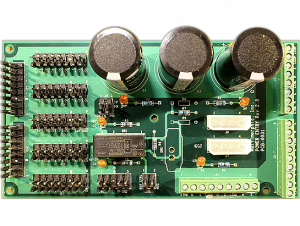
There are 3 types of driver boards:
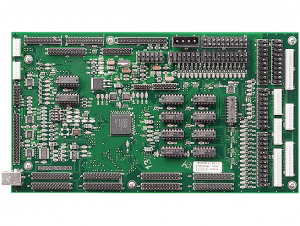
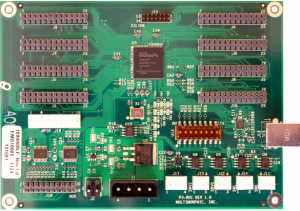
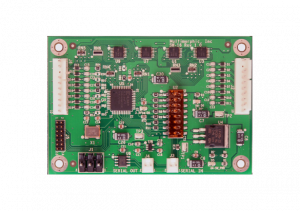
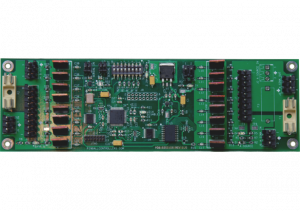
| Power Driver 16 | Power Driver Matrix 8x8 | Master |
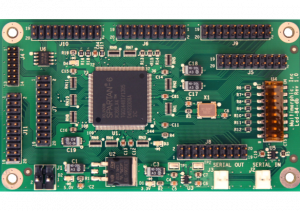
Masters connect directly to a P-ROC or microcontroller and converts the digital driver data to RS-485 for distribution to the rest of the Driver Boards in the chain. Each chain must include a master, and it must be located near the P-ROC.
We offer many types of masters:
- Both the Power Driver 16 and the Power Driver Matrix 8x8 boards can be ordered as Master Combo Boards, where they act as masters and retain all of their other functionality. These boards have a 3.3V data input pin that is fully compatible with the P-ROC's 3.3V data output pin, and they come with a 12-inch ribbon cable to connect to a P-ROC. The data input pin on these boards cannot be directly connected to a 5V source. We recommend one of these boards if you plan on locating at least one Driver Board near your controller (P-ROC or other controller) and your controller is 3.3V compatible.
- Power Driver Masters are built on the same printed circuit board as Power Driver 16 and Power Driver Matrix 8x8 boards, but most of the parts are de-populated, leaving only the master logic. These boards have a 3.3V data input pin that is fully compatible with the P-ROC's 3.3V data output pin, and they also come with a 12-inch ribbon cable to connect to a P-ROC. The data input pin on these boards cannot be directly connected to a 5V source. We recommend one of these boards if your controller is a P-ROC, you won't be locating any other Driver Board near the P-ROC, and you'd prefer a solution that connects directly to the P-ROC via a ribbon cable rather than needing you to wire up the data interface yourself.
- Mini RS-485 Masters are an OEM product. We did not design or manufacture these boards, but they can also act as a master for your chain of driver boards, and we sell them for your convenience. These boards have a 5V data input pin that is compatible with 5V and most 3.3V source devices, including the P-ROC (3.3V) and micrcontrollers such as the Arduino (available in both 3.3V and 5V versions). These boards do not come with any cables; so be prepared to wire them up yourself. On the logic side, they require 5V, ground, and the data signal from your controller (P-ROC, Arduino, etc). On the serial side, they provide screw terminals the serial wire that connects to the first driver board in your chain. We recommend one of these boards if you are looking to save some money and you feel comfortable wiring the data interface to your controller yourself. These boards have a number of configuration options settable via jumpers. We recommend the following configuration:
- Half/Full jumper set to Half.
- RS422/RS485 jumper set to RS422 (counter-intuitive, but setting this to RS422 eliminates the need for a 4th wire on the logic side, for data direction).
- All other jumpers toward the ICs (away from the screw terminals).
Note - Other RS-485 transmitter boards that you find for sale elsewhere might also work as masters as long as they support data transfers up to 10 mbps. There are many that max out at lower bandwidths and are therefore not compatible with our driver boards.
|
Power Driver Master (click image to enlarge) |
Mini RS-485 Master (click image to enlarge) |
Availability: In stock
Example Configurations
Here are a few examples of machine features and the corresponding number of driver boards to control them:
|
Game Features |
||
|
128 individually controlled features |
8 | 0 |
|
32 individually controlled features 1 8x8 lamp matrix |
2 | 1 |
| 64 individually controlled features
2 8x8 lamp matrixes |
4 | 2 |
| 56 individually controlled features
1 16x8 lamp matrix |
3 | 2 |
For more information, check out the Frequently Asked Driver Board Questions.